|
From Tonk, the southern router leads on to Bundi and Kota. For Sawai Madhopur (80 km), take the eastern route which will take you to the Ranthambhore National Park, one of the two most important National
Parks in the state of Rajasthan which is under the Project Tiger. The gateway to this important wildlife sanctuary is Sawai Madhopur where Maharajas of Jaipur stayed at their beautiful hunting lodge
and from where important guests such as Queen Elizabeth II, Prince Phillip and the Mountbatten have also been taken on royal hunts. The modern town lies about 180 km from Jaipur and was originally
founded by Maharaja Sawai Madho Singh I of Jaipur, in 1759. The Amer rulers (the Kachhawahas) had a long standing association with Sawai Madhopur for many centuries. The Ranthambhore Fort (14 km)
was gifted to them by the Mughals, along with vast tracts of surroundings forest-land. The region around Sawai Madhopur is thick with remnants of its past history. Walls, wells, mosques and hunting
lodges adorn the lush rolling hills of the Vindhyas and the Aravalis. One of these lodges has been converted into a hotel run by Rajasthan Tourism and another, forest lodge hotel, which was a hunting
lodge of the Maharaja of Jaipur, is run as a hotel. Every effort has been made to retain the original ambience of the 30s. The Ranthambhor National Park and the Ranthambhor Fort lie within easy reach
of Sawai Madhopur (which is also the nearest railhead).
TOP
PLACES OF INTEREST ARE:
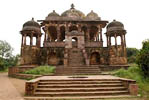
Ranthambhor Fort: Ranthambhor has a torrid history of battles of valiant and brave warriors. Ruled successively by; the Yadavs and Chauhans, Alauddin Khilji and the Mughals, Ranthambhor is alive
with memories of its glorious past in its palaces, temples, cenotaphs and numerous ruins. The Fort of Ranthambhor is reputed to have been built in 944 AD by brave Chauhan warrior after receiving the
blessing of an ascetic. Further additions were made to it by subsequent rulers. Practically impregnable, it withstood the attacks of such stalwarts as Alauddin Khilji and various Mughals, before succumbing
to their attacks. In 1528, it passed into hands of the Mughals who later gifted it to the Maharaja of Jaipur around the end of the 17th century. The surrounding forest tracts became the private hunting
grounds of the royal family.
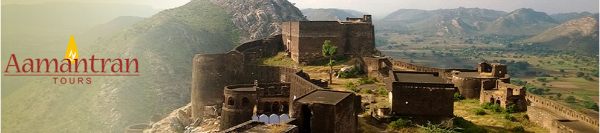
The Ranthambhor Fort is one of the oldest in Rajasthan. Located securely at a vantage point of 250 meters above the forested valley, it is built on an awesome scale. Its massive ramparts, gates and
bastions sent a stern massage to its enemies. Rao Hamir, the most valiant ruler, is said to have refused to bow his head before Khilji, despite the serve food shortage and lack of other provisions.
Though the palace lies in ruins, there are still a few ancient landmarks, the visitors can see.
Ranthambhor National Park: Ranthambhore enjoys a coveted place in the History of India where more battles were lost than won. The Graves and Cenotaphs in ruins are the mute relics of
sieges that lasted not months but years. The centre of Human activity till 200 years ago, when left no nature, has demonstrated the unfailing confidence of nature in re- establishing it as a
fine wildlife reserve, the Natural history of which is second to none among the other ten Tiger Reserves of the Country.
Geology of Ranthambhore is complex and confusing. The Vindhyan flat hill tops, gentle slopping and syncline slopes on one side and steep escarpments show clear inclined horizons of sand stone,
quartize and occasionally horizontal shale beds. The Razor sharp ridges represent the Aravallies on the out skirts of the Reserve.
As a Typical representative of the Tropical dry deciduous vegetation the forest is dominated by dhok. In early rains specially when the leaves are young, the foliage is beautifully green and finally
before falling with Gentle breeze, it turns grey. The forest in summer is dry and drab but it gets punctuated with Red flowers of the flame of Forest dhak in March and light yellow of the flowering of
Amaltas in June. Salai and Karaya are dry for most part of the year but their skeletal design display fine anatomy of the trees. A drive through Jamun and Mango ever green ever glades is thrilling as
one would expect a Tiger cooling himself in the river pools even in winters. The glades are Micro climates distinctly different from the adjoining forest. In summer they really present a contrast of
climates changing within few meters. The glades present a refreshing cool environment. The Baniyan- the tree that walks is the specialty of the vegetation. The tree at Jogi Mahal is the protected tree
to Rajasthan. It has a spread of 200 sq meters. Even the Mango trees growing luxuriously in the valleys reconfirm of the tropical environment.
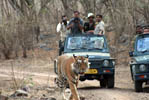
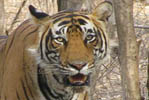
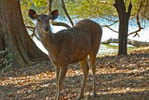
The Tiger appears to have well established himself in Ranthambhore. There are about 20 resident Tigers and a few visit the reserve in winters. The common Leopard shares the Habitat. But the number of
Jackals is large and they complete with the Tiger. Others who share with tiger are Hyaenas and sloth bears. It is the Population of Sambhar and Wild boar that attract the predators. According to the
last count there are 3100 Sambhars and 1835 wild boars in addition to 3290 chital and 1569 Nilgai. This establishes Ranthambhore Hardly 400 sq. km of an area as the reserve with the richest population
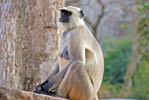
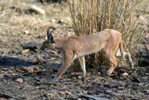
of the Sambhar. Among Tiger reserves it is the place where Chinkara is conspicuous. Population density of common langur in the reserve is also highest in the country.
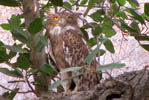
Being dry deciduous ecosystem interspersed with ever green glades it is rich in avifauna. The Paradise flycatcher, Partridge, red spur fowl and pea fowl green pigeon. The Vultures including the
King and white backed always looking for Dead are present. Crested serpent eagle is Conspicuous.
The wild paradise is on Display in the afternoon when Sambhar arrive to feed in the Aquatic ecosystem of Mirag and Padam talab and Raj Bag Lake. The shores of these lakes are the centers of
activity of wild boars, Chital and Nilgai.
Ganesh Temple: The Temple dedicated to Lord Ganesha is located in the fort of Ranthambhor, about 12 km from Sawai Madhopur and it is one of the most important Ganesha Temples in the State. There
is always a lot of activity at he temple because people believe that he first invitation to a marriage should be sent to Lord Ganesha. As a result, hundreds of invitations pour in everyday from all over
the country inviting Lord Ganesha to attend the marriage. Some people also enclose money to enable Lord Ganesha to pay for his fare! This temple is the site for Ganesh Chaturthi celebrations attracting
devotees from all over to join in the singing of devotional songs. Markets spring up in the area, allowing the people to do their shopping as well.
TOP
EXCURSIONS:
Kameshwar Mahadev - Mini Khajuraho (40 km): This is a Post-Gupta period temple which is definitely 1200 year old example of art and culture. This temple dedicated to Lord Shiva has hundreds of
couples in sexual carvings like those in Khajuraho. Every fourteenth day of Hindu months, thre is a fair held at the temple.
Surwal Lake (20 km): A shallow seasonal lake, situated between acres of agricultural fields, which usually dries out by April-May is home to a large number of different kinds of migratory birds
during winters. Painted Storks, Flamingoes, Spoonbills, Sarus Cranes, Greylag Geese amongst others can be seen in large numbers in Surwal between the months of November and March. During this season,
the best time to see birds is very early in the morning. Serious Bird watchers should be at the lake before sunrise.
Bhuri Pahadi Gaon (25 km): In this town is confluence of two rivers. There is a desert stretch of about 6 sq km. Thousands of flamingos migrate to this region every year in October - November and
stay over to next year, March.
Devpura (25 km): Where Black Bucks abound, is not far from Surwal. Here one often sees small herds of Black Bucks grazing in farmlands. Interestingly, Black Bucks are almost never seen inside
the Ranthambhore National Park. This could be because Black Bucks prefer open spaces to jungles.
Rameshwaram Ghat (70 km): Which lies at the confluence of rivers Chambal and Banas, is home for large number of migratory birds, crocodiles, alligators, the endangered river dolphins (which are
very rare) and many other animal species. A group of ancient temples also located at the ghat.
Since these ghats are beyond the Mansarovar Lake and Khandar Fort one can visit both these places in the same trip.
Pali Ghat (40 km): Situated on the banks of the river Chambal, on the border of Rajasthan and Madhya Pradesh states. This stretch of the river is officially a crocodile sanctuary and
is particularly beautiful during full moon nights.
SHOPPING:
The region is famous for "Khas" perfumes and other objects made of "Khas" including fans, small boxes, caps, etc. |