|
Along the eastern bank of the Chambal River lies Kota - an amazing juxtaposition of the majestic medieval age and modern industrialization temples its untouched wealth of impressive forts, opulent palaces and splendid
temples dating back over several centuries retain the past glory, the present day edifices and heavy industries have made it the industrial heartland of Rajasthan. The history of the city dates back to
the 12th century A.D. when the Hada Chieftain, Rao Deva, conquered the territory and founded Bundi and Hadoti. Later, in the early 17th century AD during the reign of the Mughal Emperor Jahangir, the
ruler of Bundi -Rao Ratan Singh, gave the smaller principality of Kota to his son, Madho Singh. Since then Kota became a hallmark of the Rajput gallantry and culture. The commanding fort stands overlooking
the modern Chambal Valley Project with its many dams- Kota Barrage, Gandhi Sagar, Rana Pratap Sagar and Jawahar Sagar. An old palace, dating back to the time when Kota was under the control of Hada
Chieftaincy- Hadoti faces the Kota Barrage. The Durbar Hall is ornate with beautiful mirror work and has ebony and ivory doors. Exquisite miniatures of the Kota school are housed within the Hall. Other
noteworthy edifices of the bygone era are the Brij Raj Bhawan Palace, Jag Mandir-and island Palace, a splendid haveli (mansion) with beautiful frescoes and the royal cenotaphs.
TOP
PLACES OF INTEREST ARE:
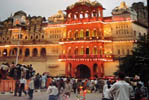
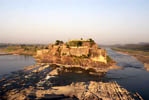
Kotah Fort: This impressive structure overlooks the turbulent waters of the Chambal River is a popular tourist attraction. According to local legend, the Bhil chieftain Kotya was slain by Jait
Singh, the grandson of Rao Deva, the founder of the Hada rule. The foundation of the Garh (Fort) was raised over the slain chief near the Salar Gazi Gate. Where, till today, the Kota Royal House
customarily offers prayers. The Kota fort rampart is one of the highest in Rajasthan, with its three-layered fortifications heavily reinforced by massive bastions and 6 double gates and 25 towers (burj).
Within its precincts are numerous palaces, Madho Singh Mahal, Raj Mahal, Bada Mahal, Chhatra Mahal and the ruined Jhala Haveli. The City Palace and the Fort comprise one of the largest of such complexes
in Rajasthan. The former rulers of Kota still retain a major portion of the palace.
The Madho Singh Trust Museum has an excellent collection of weapons, clothing and some of the best preserved murals in Rajasthan. The museum is divided into two sections, which include the Durbar Hall
with it beautiful mirror work, and doors inlaid with ebony and ivory, and a superb collection of Rajput miniatures of the Kota School. The museum also has a wildlife gallery, photo section, painting
gallery, mirror painting gallery, fresco paintings of the Lakshmi Bhandar, Bada Mahal, and Chhatra Mahal. The paintings of Raj Mahal, Chhatra Mahal and Jhala Haveli are exquisite.
Chambal Garden: A beautifully landscaped garden at the Amar Niwas. Its lush surroundings make it a popular picnic spot offering enjoyable boat rides.
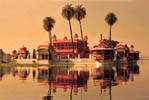
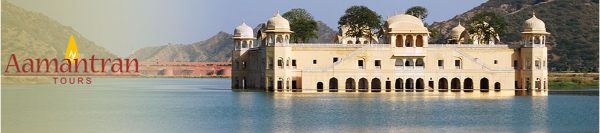
Jag Mandir: Amid the picturesque artificial lake of Kishore Sagar constructed in 1346 AD by Prince Dher Deh of Bundi, stands the enchanting little palace of Jag Mandir. The azure waters
around the red-sandstone monument enhance its beauty. Boat-rides can be enjoyed in the lake. The Keshar Bagh famous for its royal cenotaphs lies in the vicinity.
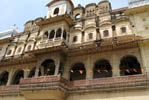
Haveli of Devtaji: The beautiful Haveli of Devta Shridharji is located in the middle of the busy market. The haveli is noted for its splendid frescoes and rooms ornate with lovely wall paintings.
Other Places worth visiting: Kansua temple with a four faced Shiva Lingam, Bhitria Kund, Adhar Shila, Budh Singh Bafna haveli and Yatapat Park.
TOP
MUSEUMS & ART GALLERIES:
Government Museum: Originally located in the Hawa Mahal just above the entrance of the fort, has now been shifted to the Brij Vilas Palace and has a new display and decor.
The museum possesses several hundred years old sculptures from different cultural centers of the region. Generally, the sculptures belong to the period form the 8th to the 12th century AD though early
specimens of the Gupta period (4th to 5th century AD) can also be seen.
Sculptures worth mentioning are Shesh Sayi Vishnu form Badoli (Chittaurgarh), Jain image of Vardhaman from Baran and a dancing pair from Ramgarh.
A few inscriptions are displayed in the museum. Yupa pillars from Badwa are very important specimens of 3rd century AD showing the popularity of Vedic rites.
Coins discovered form various sites of Kota region are preserved and displayed in the numismatic section. Most of the coins belong to the Mughal period and a few of them to the Rajput period.
Several miniature paintings of Bundi, Kota, Nathdwara and Jaipur schools are preserved in the museum. Paintings of Shrimad Bhagawata of the early 17th century are most attractive form the point of
view of workmanship.
The manuscript section contains a number of manuscripts in Sanskrit. They include Vedic, Astronomical and Astrological works. Some Hindi manuscripts are also preserved. The Geeta and the Bhagwata
written in the minutest letters on papers scroll and worth mentioning from the calligraphic point of view.
Arms, several kings of handicrafts, costumes, etc. are also displayed in this section. A panoramic view of the cultural aspects of Kota region is available in this section through photographs, charts,
maps etc.
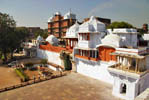
Rao Madho Singh Trust Museum, Garh Palace: The old 17th century Kota Fort Place is a vast complex of buildings, halls temples and courtyards altered and added from time to time by different rulers.
Many of these contain beautiful frescoes and elaborate glass and mirror work. A considerable part of the family treasures have been preserved in the Raj Mahal. These include a fine collection of weapons,
miniatures, royal paraphernalia furniture, photographs etc. The upper galleries Laksh Bhandar, Arjun Mahal, Chhatra Mahal and Baka Mahal contain some of the finest mural paintings of Kota school.
TOP
EXCURSIONS:
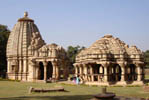
Badoli (48 km): On the ways to Pratap Sagar dam lies one of the oldest and most spectacular temple complexes in Rajasthan, going back to the 9th century AD. It was built a little before the classical
period of temple building. The principal temple is of Ghateshwar Mahadev. It is protected by a walled enclosure where one comes across archaeological remains, sculptures, carved ornamented pillars, etc.
the craftsmanship seen here is stunning. The carvings and the figure of Shiva as the cosmic dancer, Nataraja, on the door of the sanctum are bewitching. There are also many other interesting shrines in
the vicinity.
Bhainsrodgarh: Not far from Baroli is the picturesque Bhainsrodgarh Fort. Perched on a cliff - top overlooking the Chambal River, it is still occupied by descendants of a feudal family.
Gagron Fort (100 km): This impregnable fort was the Capital of Khichi Chauhans and has a glorious history of valour and sacrifice. The foundation of this magnificent for t was laid in or around
7th or 8th century AD.
It is surrounded on three sides by the water of the Ahu and Kali Sindh Rivers and is an ideal example of a Jaldurg. Outside the fort is the mausoleum of a Sufi saint, Mitte Shah, where a fair is
held every year during the Islamic month of Ramjan.
Fort & Mosque of Shahbad (160 km): The fort was constructed in 1577 AD by Chauhan ruler Muktaman. The mosque is the biggest in Rajasthan and was built during the reign of Aurangazeb.
Rock Paintings of Alania (25 km): Beautiful rock paintings adorn the bank of the River Alaniya.
Darrah Wildlife Sanctuary: A thickly wooded forest, along the south-eastern border of Kota, adjacent of the mountain range, is the former royal hunting reserve. It has been converted into a
wildlife sanctuary where panthers, spotted deer, wild boar and bear alive without any threat to their lives.
Sorsan: About 45 km east of Kota, flanking the main canal of the Chambal and Parvan Rivers, are the Sorsan grasslands. Covering 35sq km, these grasslands are rich in insects during the monsoon and
attract a good variety of resident and migratory birds, including the great Indian bustard, a reluctant flier which is more commonly seen stalking through the grasslands on its sturdy legs. Other
birds of Sorsan include mynas, orioles, quails, partridges, flycatchers, bulbuls, chats, drongos, shrikes, larks, robins and weavers. Flocks of migrants, such as warblers, flycatchers, larks,
starlings and rosy pastors, winter at Sorsan between October and March. Indian rollers can be seen in early winter. The nearby canal and lakes attract waterfowl, such as bar-headed and greylag
geese, common pochards, common teal and pintails.
SHOPPING:
Kota is the home of the famous Kota "doria" sarees made in small villages around the city. |