|
The princely state of the Jhalas, Jhalawar was created in 1838 AD after being separated form Kota by the British. Remarkable contributions from various ruler including Zalim Singh I made it a culturally rich
state. Lying in the south eastern region of Rajasthan at he edge of the Malwa plateau, Jhalawar has rocky but water-laden verdant landscape, unlike much of Rajasthan. With some exquisite
pre-historic cave paintings, massive forts, thickly wooded forests and exotic wildlife variety, Jhalawar boasts of rich historic as well as natural wealth. One can spot countless species of birds as
one drives past the lush countryside. Red poppy fields and orange laden orchards make the countryside all the more fascinating and colourful during winters. The area around Bhawani Mandi is known
for contributing a major share to the production of citrus in the country. Inscription and some marvelously built temples.
PLACES OF INTEREST ARE:
Jhalawar Fort (Garh Palace): The impressive fort in the centre of the town presently houses the collectorate and other district offices. Some exquisite paintings and mirror on the walls
of "Zanana Kha" are of particular interest. Permission to see these paintings can be obtained from the offices located here.
Bhawani Natyashala: Parsi theatre was performed in this building which was established in 1921 the Natyashala is quite unique structure and an architectural marvel. Its uniqueness lies in the fact that
its deep stage with its underground construction allows the horses and even the chariots to appear on state. Believed to be one of the eight such theaters in the world, it its heyday it was the
venue of great plays ranging form Shakuntalam to Shakespeare's classic.
TOP
MUSEUMS & ART GALLERIES:
Government Museum: Situated in the old Garh Palace near the Bhawani Natya Shala is the Government Museum.
The sculptures and architectural fragments of the 8th century city of Chandravati and sculptures and epigraphs from Jhalarapatan region fill its galleries. There are many paintings and
manuscripts and various other artifacts from the area.
EXCURSIONS:
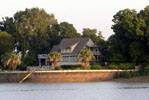
Rain Basera: On the Kota - Jhalawar road, just 6 km short of Jhalawar town is a beautiful wooden cottage situated on the banks of the Kishan Sagar. The interesting point about this
cottage is that it was built elsewhere and transported to this place almost in its original condition. You can stay here with permission from the Department of Irrigation. The cottage bought
by Maharaja of Jhalawar was exhibited at Lucknow in 1936 and was originally constructed by the Forest Research Institute of Dehradun.
Jhalarapatan: Another 6 kms away, Jhalarapatan, "the city of bells", is quite unique. It was believed to have been built basically to protect the trade caravans as Patan happened to be
junction of caravan's routes. The pride of Jhalarapatan is the 10th century Surya (Sun) Temple (Padam Nath Temple). The idol of Surya and the lovely sculptures on this massive temple are impressive. The
11th century Shantinath Jain Temple is known of its fine murals and sculptural richness. Jhalarapatan is famous for the ruins of beautiful temples, artistic creations, exquisite sculptures and other
elegant specimens or architecture.
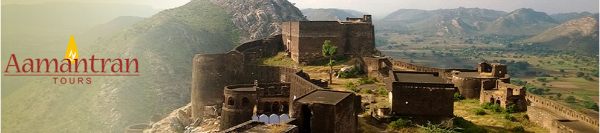
Gagron Fort: This impregnable fort was the Capital of Khichi Chauhans and has a glorious history of valour and sacrifice. The foundation of this magnificent for t was laid in or around 7th or 8th
century AD.
It is surrounded on three sides by the water of the Ahu and Kali Sindh Rivers and is an ideal example of a Jaldurg. Outside the fort is the mausoleum of a Sufi saint, Mitte Shah, where a fair is held every
year during the Islamic month of Ramjan.
Chandrabhaga Temples (7 km): on the banks of the magnificent Chandrabhaga River stand some splendid 7th century AD temples, the intricately carved pillars and arched gateways are fine examples
of the temple architecture and craftsmanship. The 11th century AD Shantinath Jain Temple is also noteworthy with fine murals and exquisite sculptures.
Bhim Sagar (24 km): The dam built on the Ujad River is near the erstwhile capital of Khichi Chauhan Rulers. Bhimsagar allows a glimpse of the Rajput and Mughal architecture in the ruins of
palaces, temples and mosques.
Dag (100 km): Renowned for some 12th century AD temples of Dageshwari Mata, Rani Ka Maqbara and Kama Varneshwar Mahadeo, Dag is a fascninating experience in the rustic ambience.
Atishay Jain Temple, Chandkeri (35 Km): This 17th century temple is notable example of temple architecture. It also has religious value having Adinath statue, 6 feet tall, in a sitting position.
Accommodation and meals are available at reasonable prices in the temple area.
Dalhanpur (54 km): The ancient ruins of impressive temples extend over an area of 2 km. marvelously carved pillars, torans and exquisite sculptures make these temples interesting. Dalhanpur lies
on the bank of River Chhapi, where an irrigation dam is being constructed. Dense forests with lush foliage add to the natural beauty of the spot.
Fort of Gangadhar (120 km): an impressive edifice with the oldest rock inscription and some marvelously built temples.
Buddhist Caves and Stupas: The ancient Buddhist caves located in the village Kolvi. A colossal figure of Buddha and the carved Stupas are the most impressive structure in the caves.
Kakuni (65 km): On the bank of Parvan River are ruins of and old town ship with a huge idol of Ganesha and an 8th century Shivlinga. The temple ruins are worth a visit.
Manohar Thana Fort: This fort in the tribal area once occupied an important strategic position.
TOP
FAIRS & FESTIVALS:
Gangaur (March / April): Primarily a festival for women, Gangaur is held in honour of Goddess Parvati. Women pray for their husbands, unmarried women entreat the goddess for a good groom.
Processions are taken out, women draw water from wells, pick flowers and sing hymns.
Other fairs & festivals of region are: Kaleshwar Mahadev Fair at Kyasara, Annath Chaturthi at Jhalarapatan and Rang Panchmi (March).
SHOPPING:
Cane baskets, stone images of Jhalarapatan and hand painting on cloth are specialties of the region. |