|
The royal fortified city with a timeless appeal. Lying in the north of the desert state, the city is dotted with many sand dunes. Bikaner retains the medieval splendour that pervades the city's lifestyle.
More popularly called the camel country, the city is renowned for the best riding camels in the world. Bikaner's history dates back to 1488 AD, when a Rathore Prince Rao Bikaji - a descendent of the
founder of Jodhpur (1459 AD), Rao Jodhaji, established his kingdom here. Rao Jodhaji had five sons but Rao Bikaji was the most enterprising of them. Bikaji chose a barren wilderness called 'Jangladesh'
and transformed it to an impressive city, called Bikaner after the founder's name. The strategic location of Bikaner on the ancient caravan routes that came from West/Central Asia, made it a prime
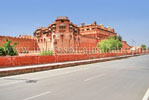
trade centre in the time of the yore. Bikaner stands on a slightly raised ground and is circumscribed by a seven km long embattled wall with five gates. The magnificent forts and palaces, created with
delicacy in reddish pink sandstone, bear testimony to its rich historical and architectural legacy. Undulating lanes, colourful bazaars and bright and cheerful folks make Bikaner an interesting experience.
TOP
PLACES OF INTEREST ARE:
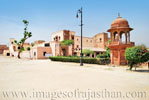
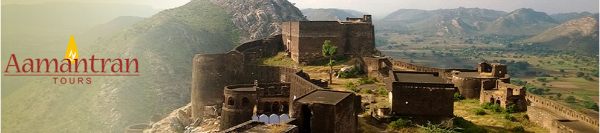
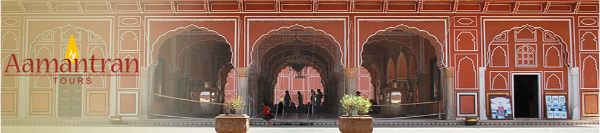
Junagarh: Just over five centuries old, Bikaner was founded by a scion of the house of Marwar (Jodhpur). The fort of Bikaner, Junagarh, however, was built in 1593 by Raja Rai Singh who also
served as a general in the army of Emperor Akbar. Made from red sandstone and encircled by a moat around which the modern city of Bikaner has spread in a somewhat erratic fashion, Junagarh
consists of several palaces and apartments in a remarkable state of preservation. The art of mason and sculptor is most obvious in the recreation of delicate stone screens, kiosks, pavilions and
series of arched entrances to buildings reached from corridors that have windows overlooking the city beyond.
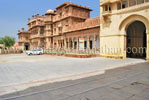
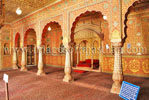
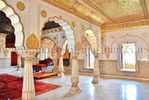
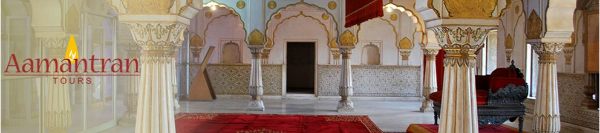
Some of the palaces are among the most richly decorated in Rajasthan and include Anup Mahal, Chandra Mahal and Phool Mahal. They give the impression of rich inlay of pietra dura, though in fact the apartments
are merely richly painted. The paintings have been preserved as good as new because of extremely dry heat conditions of the desert town. Another palace, Badal Mahal recreated painting of clouds on its walls,
a reminder of the monsoon that often failed the settlement. The Anup Mahal courtyard has a throne set in a pool of water. Bringing alive the sensitivity the rulers showed in their building environment.
Lallgarh Palace: the architectural masterpiece in red sandstone, the palace was built by Maharaja Ganga Singh in the memory of his father Maharaja Lal Singh. The palace has beautiful
latticework and filigree work. Sprawling lawns with blooming bougainvillea and dancing peacocks make it a not-to-be missed visual treat. Part of the palace has been converted into a luxury hotel and a
museum known as Shri Sadul Museum.
Gardens and Parks: Gaga Public Park with a Zoo, Ratan Bihari Temple Park and Tessitory Park are some of the lovely parks in the city, surely worth a visit.
TOP
MUSEUMS & ART GALLERIES:
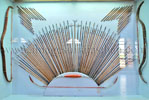
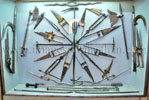
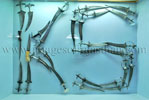
Fort Museum, Junagarh Fort: Ganga Mahal, the imposing halls added by Maharaja Ganga Singh, now housed the Fort Museum. It contains a fine collection of antique Rajput weaponry, jade handle
daggers, camel hide dhals (shields) and inlaid handguns & camel guns. Other important objects include a pair of drums belonging to Jambhoji, the said who predicted the foundation of the dynasty by
Rao Bika for 450 years. Photographs and items of personal use by Maharaja Ganga Singh and miniatures are also on view.
Ganga Golden Jubilee Museum: Established near the Lallgarh Palace in 1937 on the ever of the Golden Jubilee celebrations of Maharaja Ganga Singh, this museum now run by the Government of
Rajasthan, was shifted to a new building in the Civil Lines in 1954. Some principal sections of museum are: Maharaja Ganga Singh Memorial, Local Arts & Crafts, Sculpture, Terracotta and Bronzes,
Armoury, Miniature Paintings, Folk Arts, Lithoprints of British Interpretation of the was of independence 1857.
Shri Sardul Museum and Anup Library, Lallgarh Palace: Fort of the early 20th century Lallgarh Palace have been converted as a museum containing a large number of items used and collected by
Maharaja Ganga Singh and his successors. Old photographs, trophies, shikar objects early cameras and movie projectors and weapons used by Maharaja Karni Singh, the manuscripts brought back
from the Deccan by Raja Anup Singh in the 17th century.
TOP
EXCURSIONS:
Bhandeshwar & Sandeshwar Temples: The oldest surviving monuments of aesthetic heritage, the 14th century Jain temples of Bhandeshwar and Sandeshwar were built by two brothers and name
after them. The rich mirror work, decor and frescoes of the Bhandeshwar and Sandeshwar; and their gold-leaf paintings are noteworthy.
The old Jain havelies are other popular tourist spots. Other important temples of Bikaner include the Lakshminathji, Ratan Bihariji, and Nagnechiji temple. Also worth seeing is the Bhaironji Temples at
Kodamdesar about 40 kms from Bikaner.
Camel Research Farm (8 km): Spend a day with the indispensable ships of the desert at their camel research and breeding centre - one of its kind in Asia. Timing 15.00 hrs to 17.00 hrs (closed on
Sundays and Government holidays). Photography prohibited. The farm extends over 2000 acres of semi arid land and is managed by the Central Governments. The Camel Corps of Bikaner were a famous fighting
force during the 'Raj' and are still an important part of the desert warfare and defence through the Border Security Force (BSF).
Devi Kund (8 km): A royal crematorium with several ornamented cenotaphs or 'chhatris' built in the memory of the Bika dynasty rulers. Maharaja Suruj Singh's Chhatri is the most impressive of all,
created entirely in white marble with spectacular Rajput paintings on the ceiling.
Gajner Wildlife Sanctuary (32 km): The lush foliage of woods on the Jaisalmer road are a haven to nilgai, chinkara, black bucks, wild boar and blocks of imperial sand grouse. The Gajner Palace, a
summer retreat of the kings, stands on the bank of the lake and have been converted into a hotel.
Shiv Bari Temple (6 km): Built by Doongar Singhji in the late 19th century. The temple in surrounded by an embattlement wall. It has beautiful paintings and a bronze Nandi facing the Shiva Lingam.
Kalibanga (205 km): The extensive remains of the pre-Harappan and Harappan civilizations, found at the place in the Hanumangarh district, are of immense interest of archeology enthusiasts.
Deshnok: A visit to the fascinating temple of Karni Mata, an incarnation of Durga, at this village, 30 km south of Bikaner along the Jodhpur Road, is not for the squeamish. Here rats are
considered to be incarnations of storytellers and the holy rodents run riot all over the temple complex. The rats are known as Kabas, and it considered highly auspicious to have one run across your
feet - you'll find you'll be inadvertently graced in this manner numerous times whether you want it or not!.
Kolayat: The Kapil Muni Fair is the largest fair of Bikaner district held on Kartik Poornima at Kolayat- originally Kapilayata - named after the sage Kapil who is believed to have done tapasya
(meditation) here for the redemption of mankind. Kolayat is situated in an arid area. There is a lake with 52 ghats shaded by banyan trees aroud the lake. A temple dedicated to Kapil Muni is
situated on the Kapil Muni Ghat and it has a marble statue of the saint.
A large number of people come to Kolayat to redeem themselves by taking holy dips in the Kolayat Lake throughout the year, but it is considered very auspicious to take a dip on Kartik Poornima.
The lakeside is dotted with temples. Ghats names after these temples allow privacy to the pilgrims, with some ghats meant only for women. Visiting Kolayat has been considered to be a tritha or
pilgrimage of great importance and it is believed that one day's stay at Kolayat benefits as much as 10 years spent at nay other sacred place. The legendary Maharishi Kapil and the Kapilayatan
Lake find mention in the Puranas and Kapil Muni is believed to have descended from Lord Brahma. A cattle fair is held in conjunction with the Kapil Muni Fair. Buffaloes, camels, horses
and cattle are sold. Certificates and prizes are given away to the best breeders at the fair.
TOP
FAIRS & FESTIVALS:
Camel Festival: A lively and colourful event, the Camel Festival is organized by the Department of Tourism and Art & Culture Rajasthan in Bikaner every year. January is just the right
month for a desert spree, and Bikaner just the right place to see the ships of the desert. In the camel country Bikaner, these desert leviathans pull heavy cart loads, transport grain and even
work at the wells. The Camel Festival begins with a colourful procession of bedecked camels against the red sandstone backdrop of Junagarh Fort, the festivity advances to the open sand-spreads
of the grounds, followed by the best breed competition, the tug-of-war contest, camel dance and acrobatic etc.
The camel display amazing footwork, dancing gracefully to the slightest direction of the trainers. Bridal bribles, bejeweled necks, Jingling anklets and long, lanky camel shadows on dusky
sands cast a magical spell. Hundred of tourists and thousands of local and dignitaries revel in this man-and-animal affair organized especially for the tourists. The evenings close with a
different tenor and tempo altogether: a traditional rendezvous of renowned artistes of Rajasthan and the local folk performers. The jubilant skirt-swirling dancers, the awe inspiring fire dance, and
the dazzling fireworks light up the fortified desert city Bikaner.
Gangaur Festival (April): Dedicated to Goddess Parvati the consort of Lord Shiva. Grand processions of the deity accompanied by dancing women are a part of the eighteen day long celebrations.
Jambheswar Fair: The Jambheswar Fair is held in the village Mukam of tehsil Nokha, Bikaner District, twice a year on Phalguni Budi Amavasya and Ashvin Budi Amavasya, in memory of the founder
of the Bishnoi sect - Jambheshwarji. His teachings are condensed into 120 sabdas (sayings) which propagate the cardinal virtues of self-control, truth and non-violence. He taught 29 articles of
religion and hence the term Bishnoi from Bees (twenty) and Nau (Nine).
The Bishnoi consider him to be an incarnation of Vishnu. Near the Nokha Town, there are two temples of Jambheswarji, one in the village Mukam (mukam literally means abode because he resided
here) and the other on the sane dune of Samarthal. The temple at Mukam has the Samadhi of Jambheswarji and a life-size portrait adorn the central hall. The grain which is offered at the temple
is used to feed pigeons, peacocks and birds throughout the year at fenced platforms beside the temple, built specifically for this purpose
Karni Mata Fair, Deshnok: Karni Mata Fair is held twice a year at Deshnok, a small town near Nokha in Bikaner District. The first and larger fair is held in March-April during the Navratras
from Chaitra Shukla Ekam to Chaitra Shukla Dashmi. The second fair is held in September-October, also during the Navratras, from Ashvin Shukla Ekam to Ashwin Shukla Dashmi. Karni Mata was an
ascetic who led a righteous life dedicated to the service and upliftment of the poor and downtrodden of all communities.
It is believed that she possessed supernatural powers. The foundation of Deshnok was laid by her and she has been worshipped as a goddess by her principal followers, Charans, as well as the
rulers of Bikaner, who regarded her as the patron deity. The Karni Mata Fair is held in her honour.
SHOPPING:
Bikaner has its own peculiar items, typical to this region; its articles made of camel-hide, camel and sheep wool carpets and woollen items, wood and leather products.
The Bikaneri Bhujia, Rasgulla and sweets are popular all over India. Shopping areas include inside Kote Gate, King Edward Memorial Road, Khadi Industries Institute, Station Road, Urmil Trust at Junagarh Fort. |